¶ Line Profile
All data presented is fictitious and is intended for demonstration purposes only.
¶ What is the Line Profile?
The term “line profile” refers to a set of configuration parameters that control the bandwidth and quality of the optical signal transmitted to customers through the fiber optic network.
These parameters include characteristics such as transmission rate, modulation, transmission power, maximum range, and other technical specifications related to optical transmission.
¶ DBA Profile
Within the context of an OLT (Optical Line Terminal), the DBA (Dynamic Bandwidth Allocation) profile is an important part of the line profile. The DBA is a mechanism used in PON (Passive Optical Network) networks to dynamically allocate bandwidth to clients, based on their real-time traffic needs.
¶ GEMs
Within the context of an OLT, the GEM (GPON Encapsulation Method) is an important part of the line profile, especially in networks that use GPON (Gigabit Passive Optical Network) technology. GEM is an encapsulation method used to transmit customer data over the optical network.
In a GPON network, customer data is encapsulated in GEM frames before being transmitted over the optical network. These GEM frames are then multiplexed along with other services, such as voice and video, on a single fiber optic connection to the OLT, where they are deencapsulated and forwarded to the data network.
¶ TConts
Within the context of an OLT in a GPON network, the TCONT (T-CONT, Transmission Container) is an important part of the line profile. The TCONT is a logical entity that defines an upstream connection between an ONT (Optical Network Terminal), which is located on the client side, and the OLT.
TCONT is responsible for reserving and managing the required bandwidth for each ONT in the GPON network. It establishes a logical connection between the OLT and the ONT to ensure efficient transmission of customer data over the optical network.
¶ VLANs
Within the context of an OLT and considering VLANs (Virtual Local Area Networks), they are not directly related to the line profile. VLANs are a network technology that allows segmenting a local network into several logical subnets, isolating traffic between different groups of devices, regardless of their physical location on the network.
However, VLANs can be configured on an OLT as part of the larger network infrastructure, especially if the OLT is being used in a broadband access network, such as a GPON or Ethernet PON (EPON) network.
VLANs can be configured on an OLT to segment the traffic of different clients or services, ensuring isolation and security. For example, in a GPON network, different clients can be assigned to separate VLANs to prevent them from accessing each other's data. Likewise, video, voice, and data services can be segregated into different VLANs to ensure appropriate quality of service (QoS) for each type of traffic.
¶ First let's navigate to the Line Profile management screen
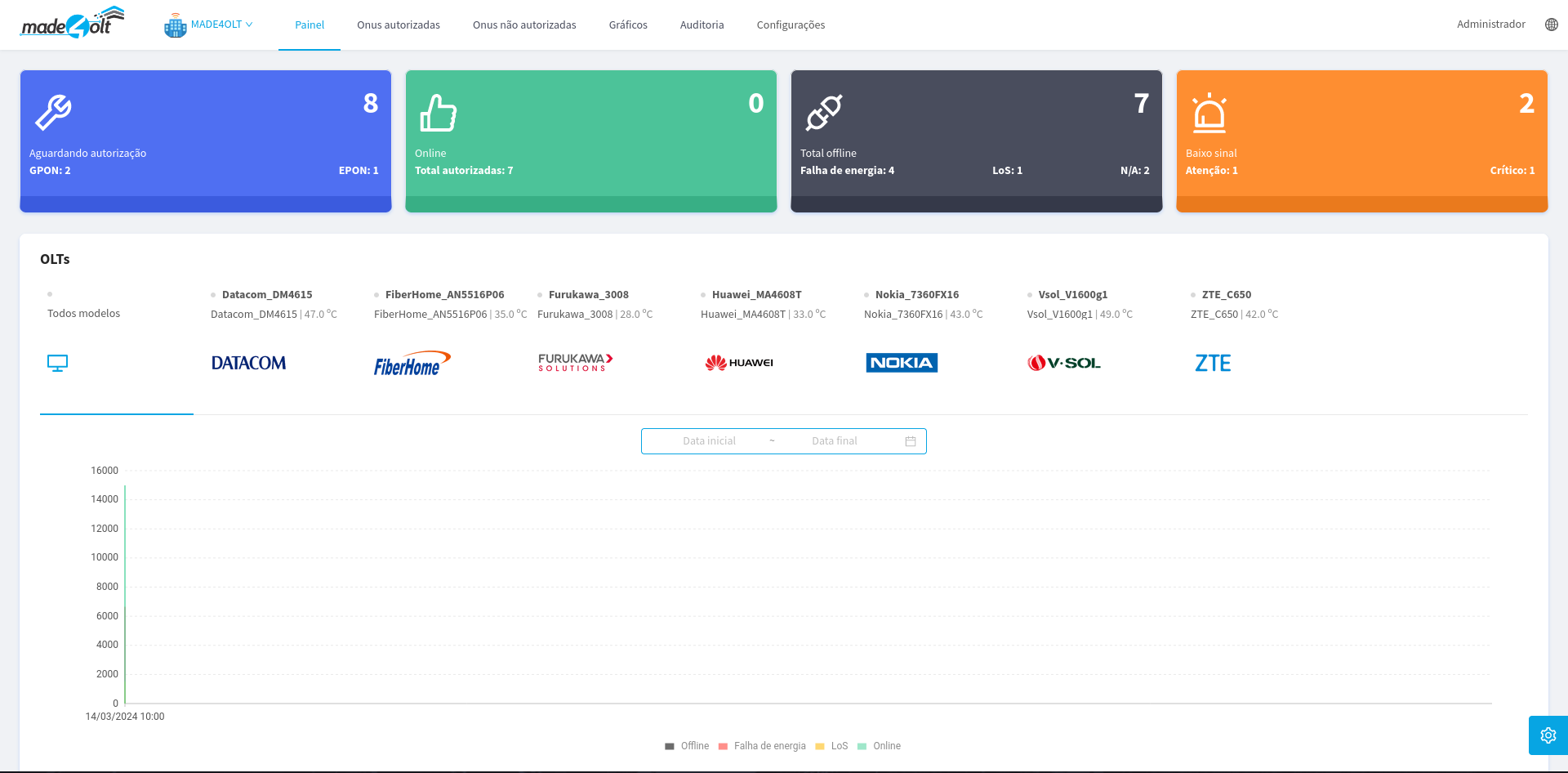
- Let's navigate to the screen where the line profiles are created. When accessing the system, we are faced with the following screen as the home page.
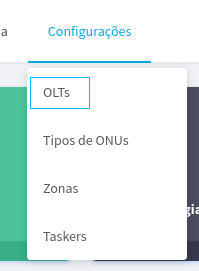
- Then, in the navigation bar found at the top of the screen, we will select the option Settings.

- A Dropdown menu will open, where we will select the option OLTs.
- A side menu will appear listing the OLTs registered in your system.
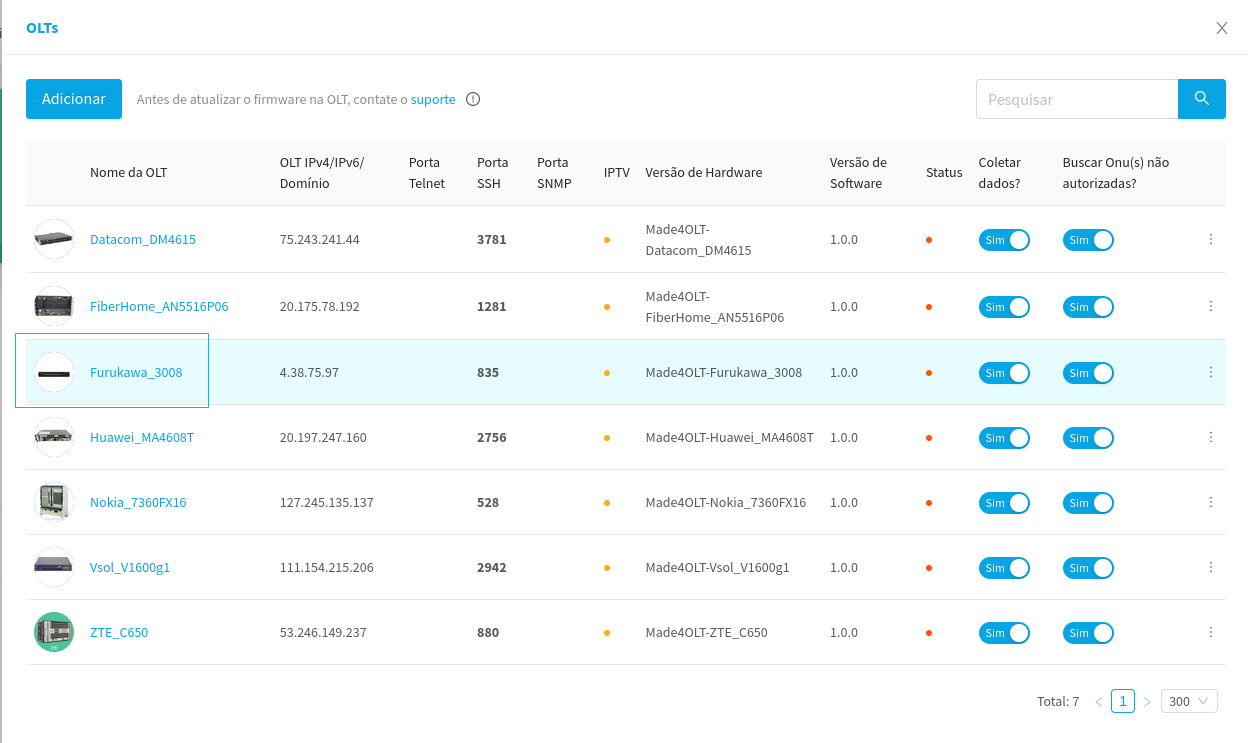
In this case, we will select the Furukawa_3008 OLT
- Thus, the user will be redirected to the chosen OLT management screen.
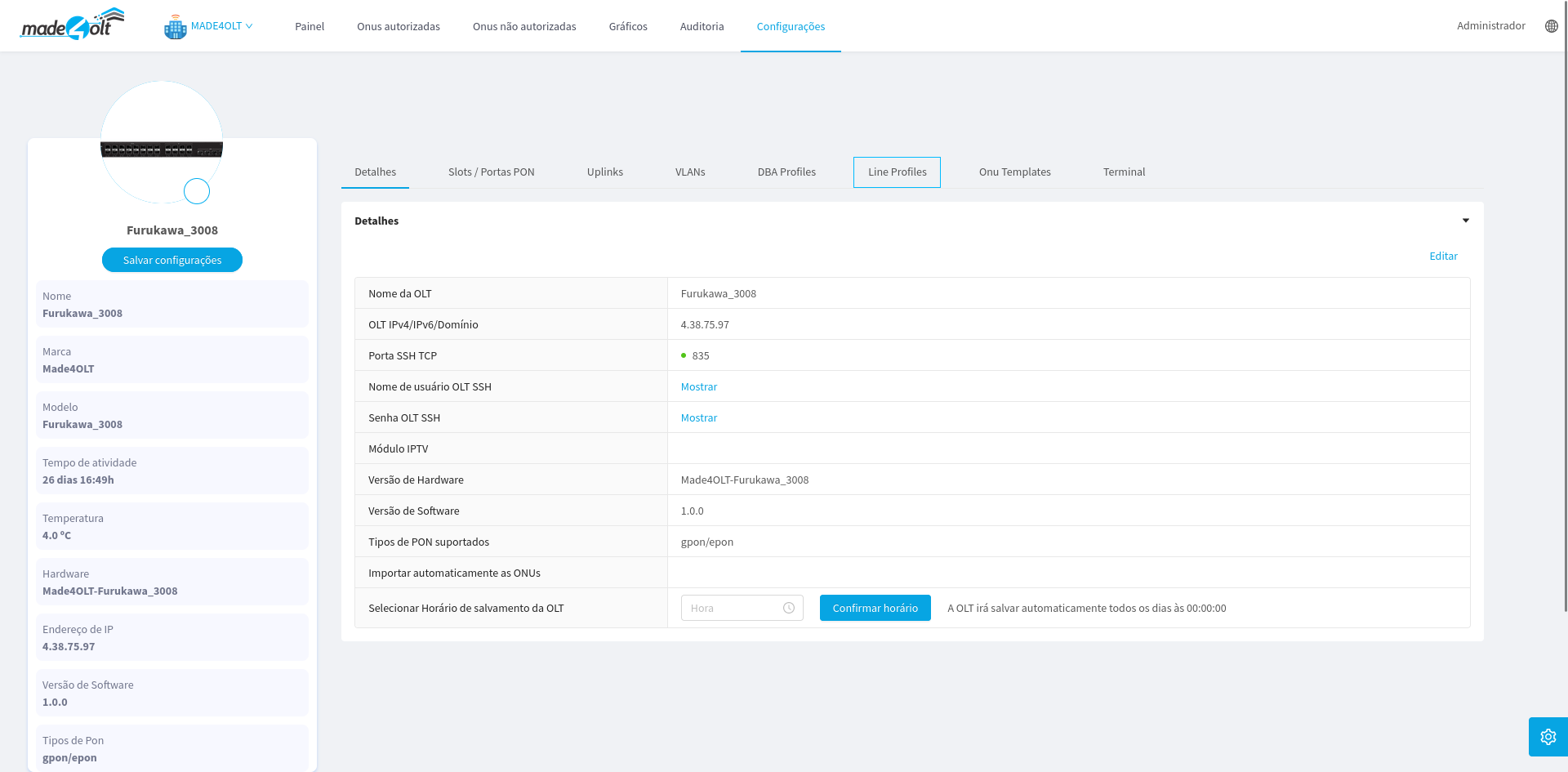
At this time we will only pay attention to the line profile.
- Here we select the option Line Profiles

- After selecting, the system will show us the following screen.
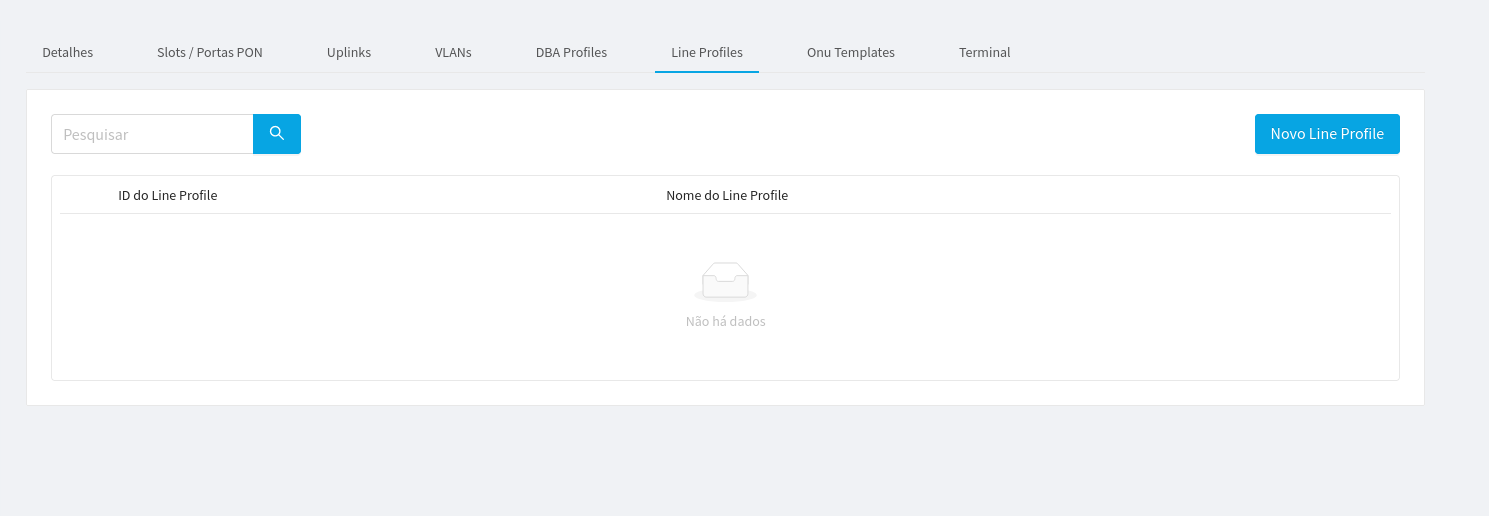
¶ From now on, we can create and configure our line profiles
¶ Now let's move on to the creation process step by step.
- To start creating a line profile, click the blue button Add at the top right of your screen. A side menu will open on the right to create the line profile.
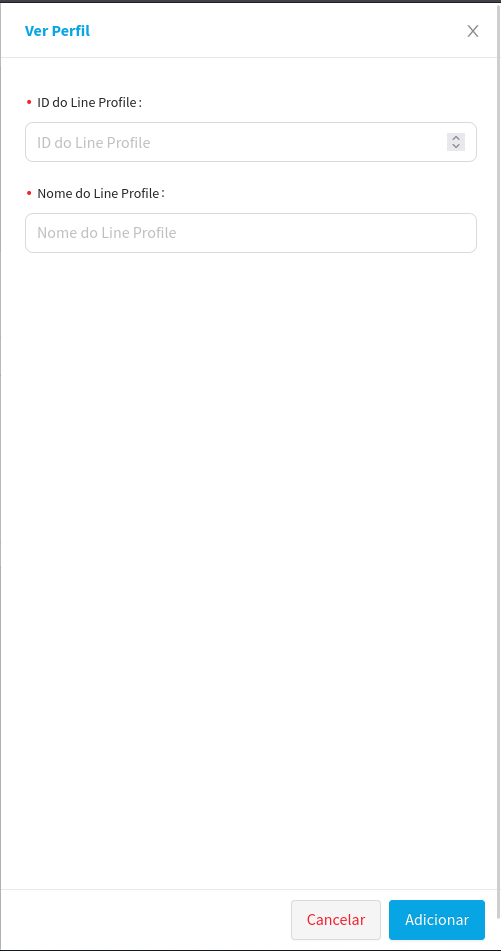
- Here, you can select the ID of the new line profile, these fields only accept numbers.
- You will also choose a name for the new line profile, here you can enter a text that refers to the use of the line profile.
- We will continue with ID --> 3 and Name --> Test-Made
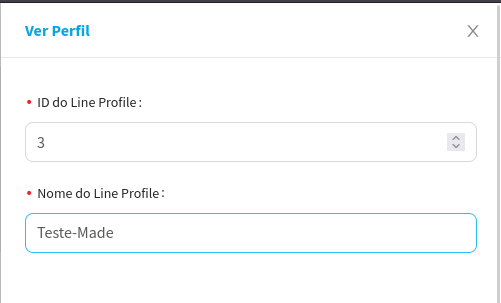
- Now just click on the blue button Add, which is located in the lower-right corner of your screen.
- In this way, a new Line Profile was created, but we still need to configure its attributes.
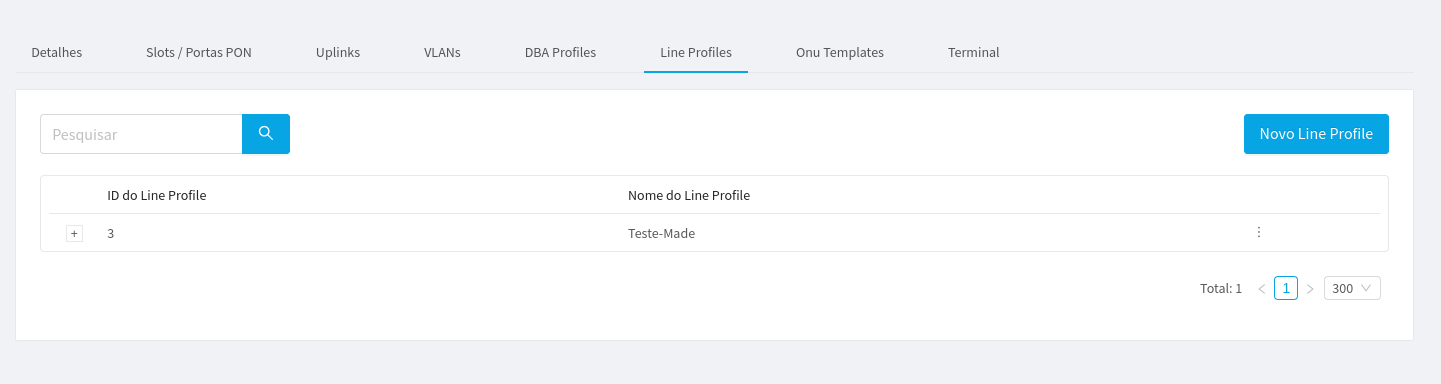
- Click the + icon, located to the left of your new Line Profile ID
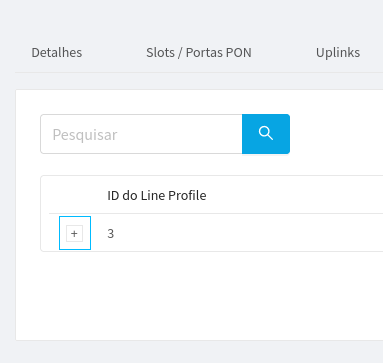
- A new configuration menu will expand.
- Here you will set up a new TCONT, to be linked to your Line Profile
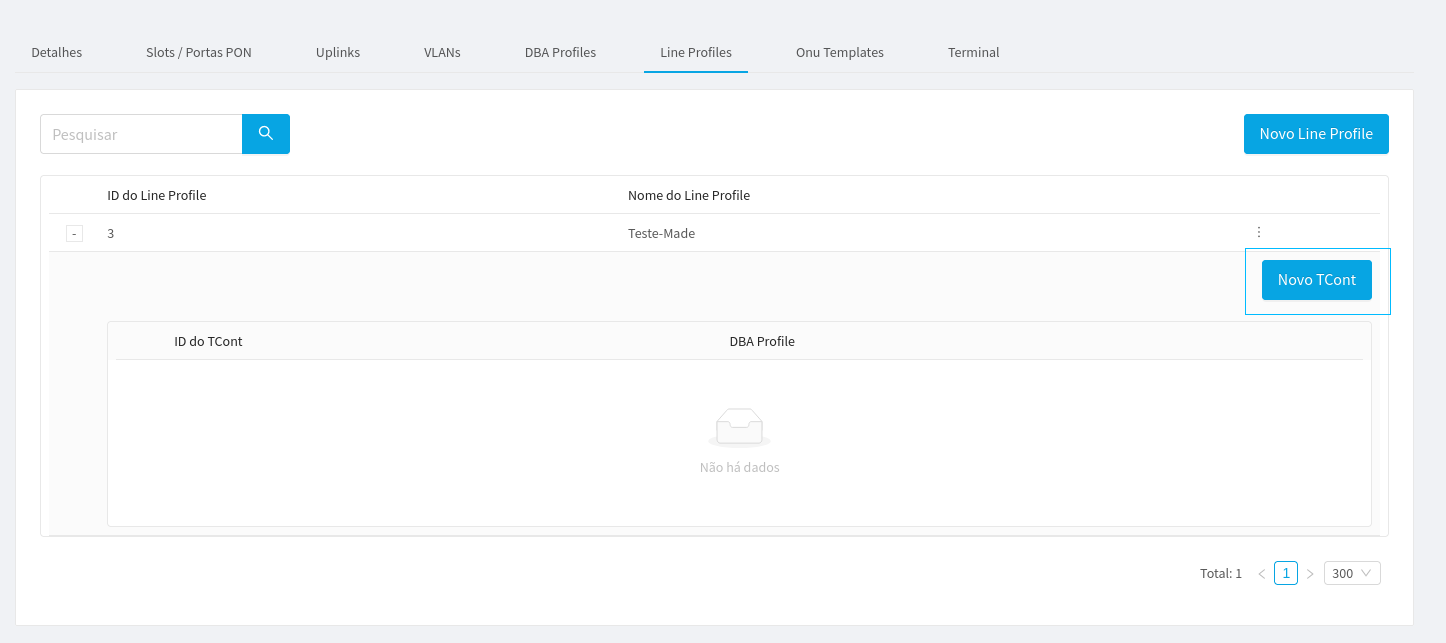
- You will click the blue button New TCont, located in the upper-right corner of the new expanded drawer.
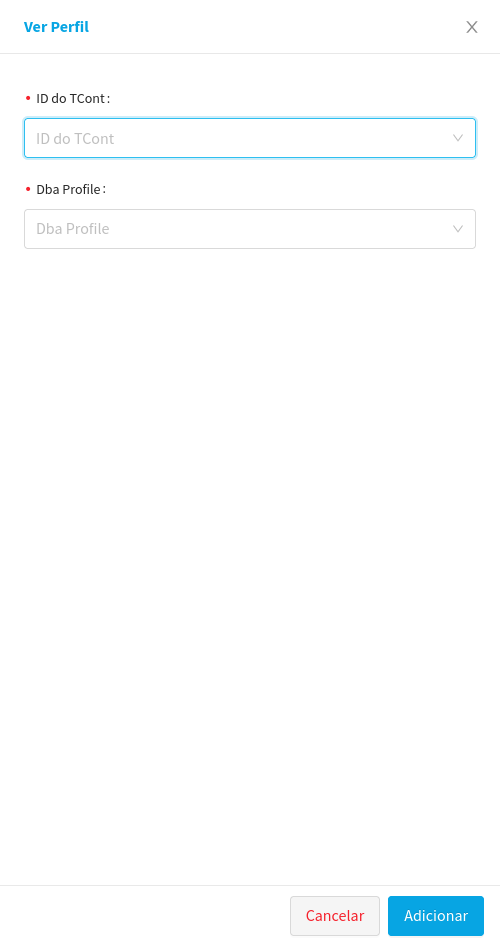
- A side menu will open for creating TCont.
-
-
Here, it will only be possible to create 3 tConts for each Line profile, so when selecting the tCont ID, 3 options will be available.
-
In the case of the DBA Profile, a list of the Available DBAs will be loaded.
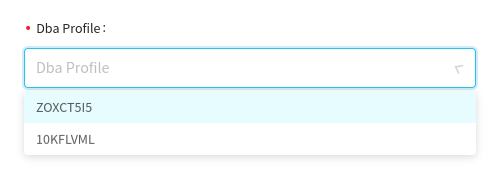
- In this case, only 2 DBA Profiles are available
-
Now just click on the blue button Add, which is located in the lower-right corner of your screen.
-
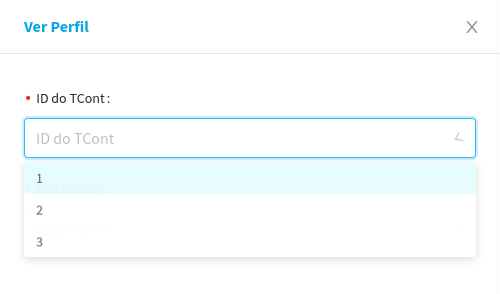
- We will continue with tCont ID --> 1 and DBA Profile --> ZOXCT5I5
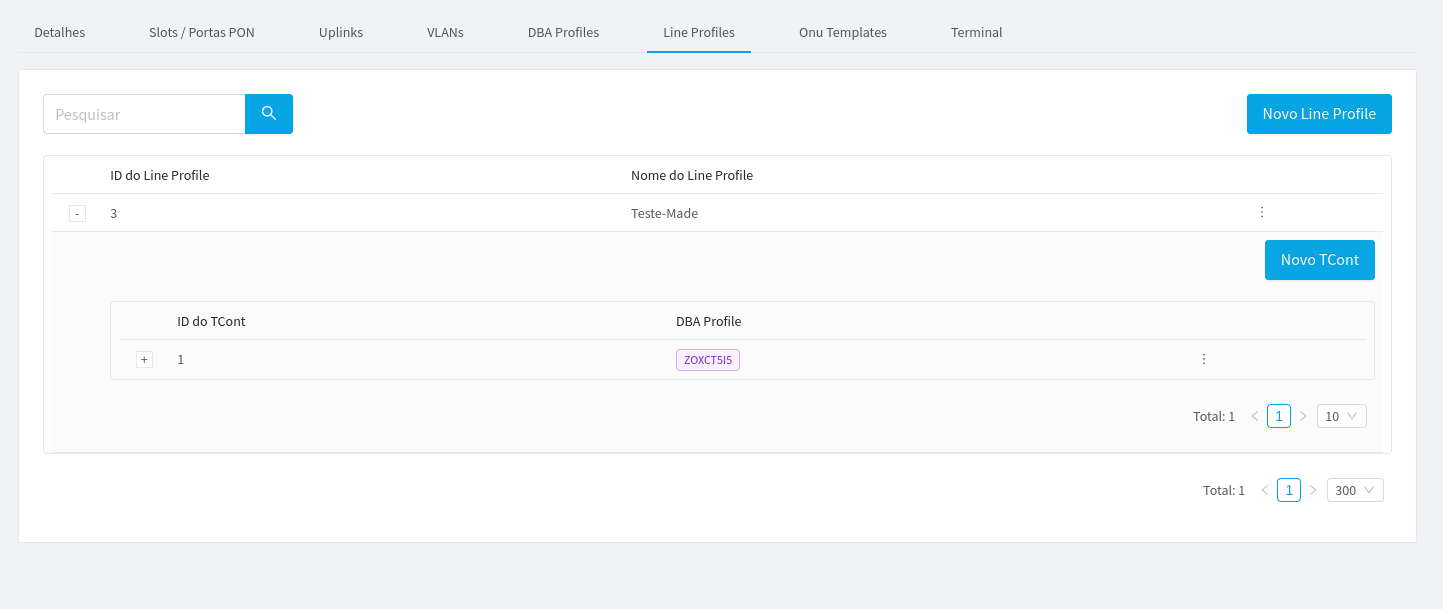
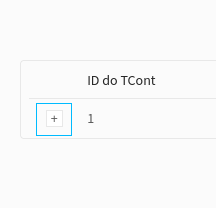
- Similar to the previous step, click on the + icon, located on the left side of the newly created tCont ID.
- Here you will configure a new GEM to link with your TCont and Line Profile.
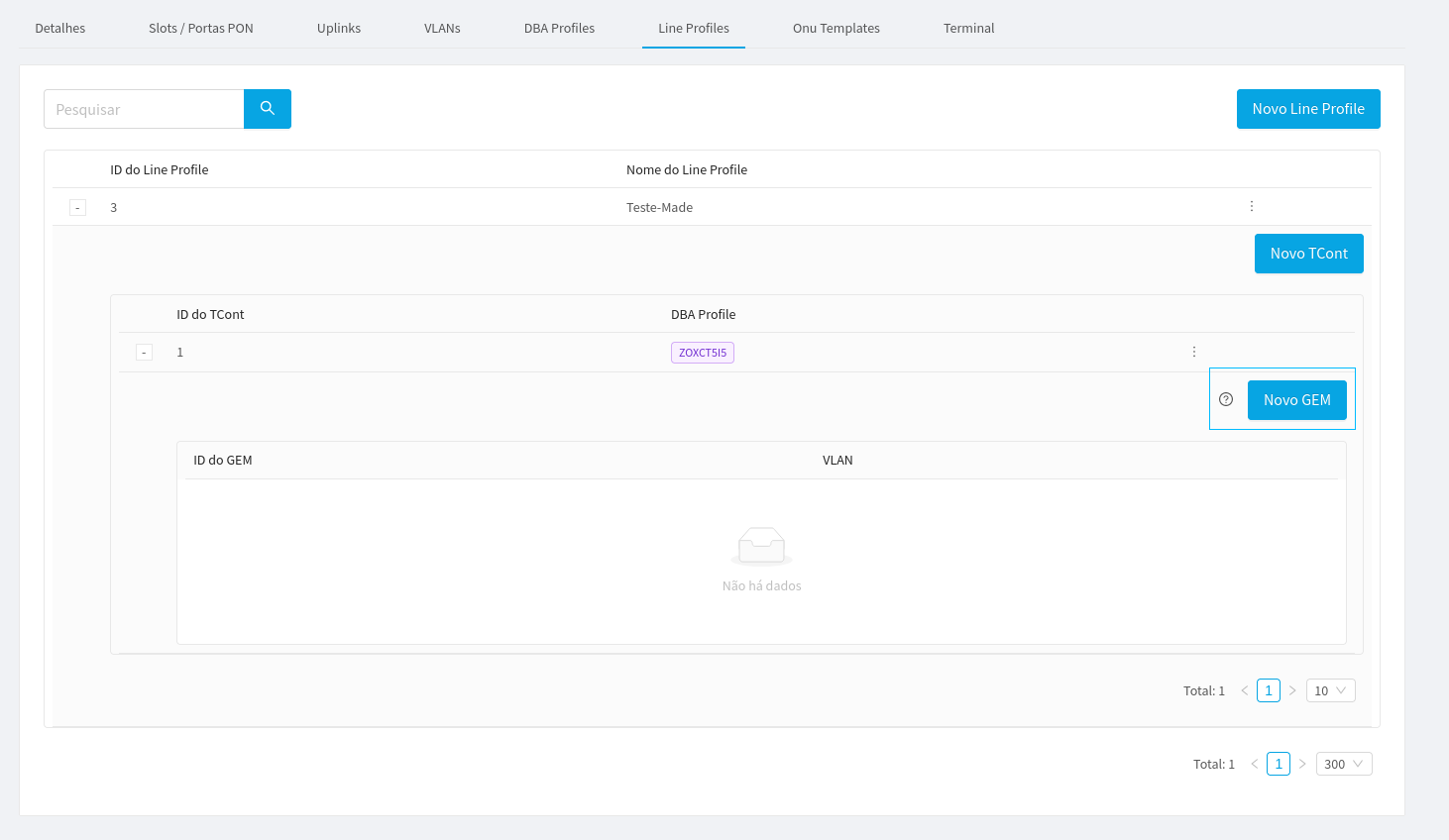
- You will click the blue button New GEM, located in the upper-right corner of the new expanded drawer.
- A side menu will open for creating the GEM.
-
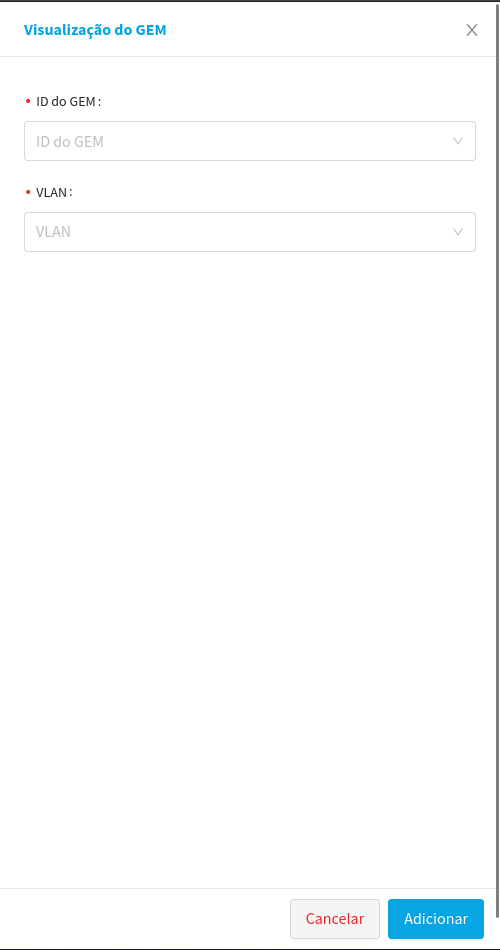
-
Similar to TCont, it will only be possible to create 3 GEMs for each Line Profile
-
In the case of VLANs, a list will be loaded with all the VLANs available on the OLT.
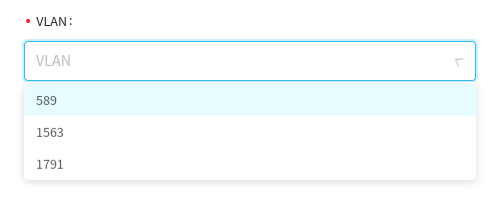
- In this case, only 3 VLANs are available.
-
Now just click on the blue button Add, which is located in the lower-right corner of your screen.
-
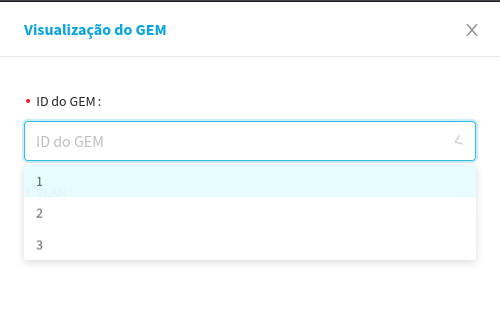
- We will continue with GEM ID --> 1 and VLAN --> 1563
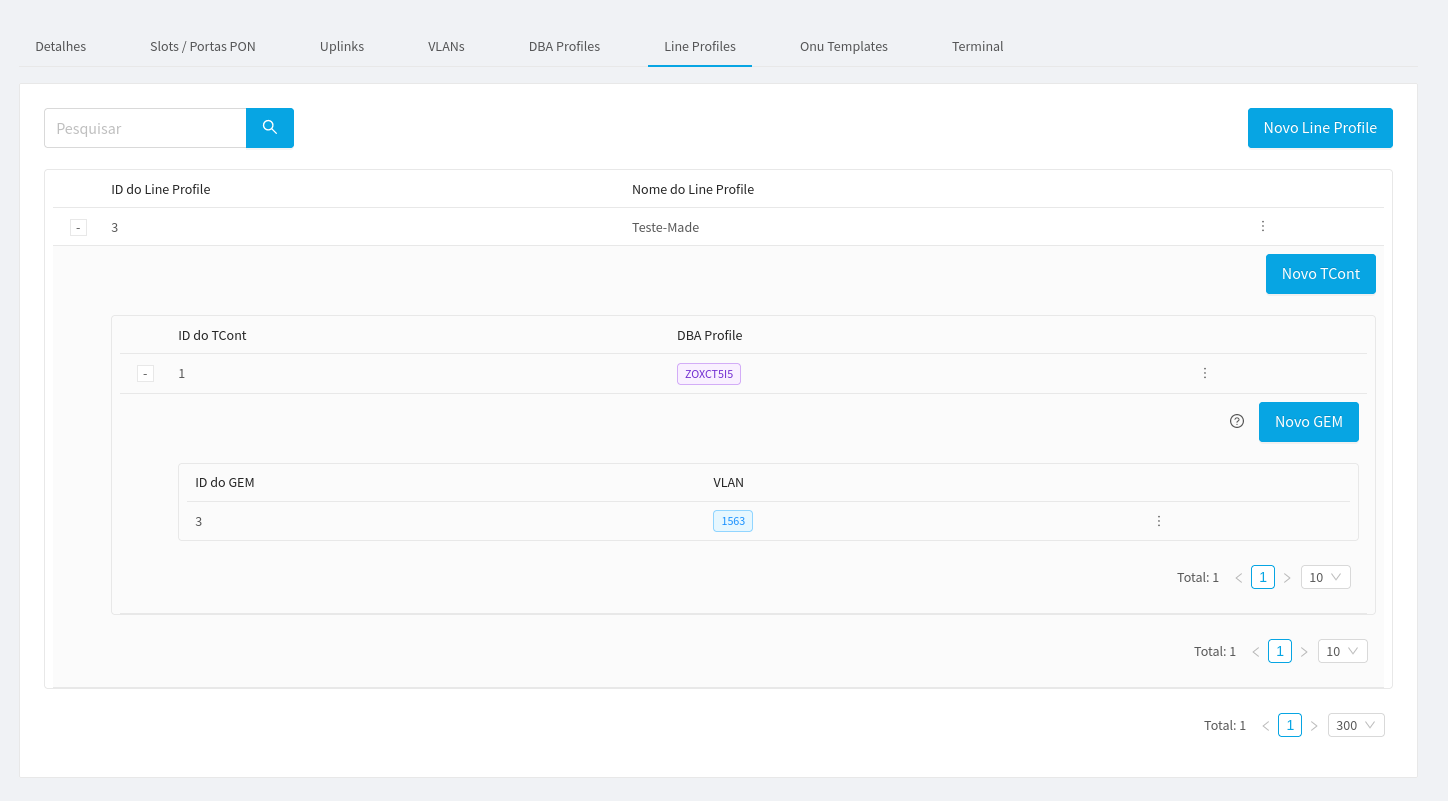
- With that, we completed the creation of a new Line Propfile.
¶ With a Line Profile created, the next step would be to configure a new Template..
¶ With this we completed the creation of a new Line Profile using Made4olt.
All data presented is fictitious and is intended for demonstration purposes only.